
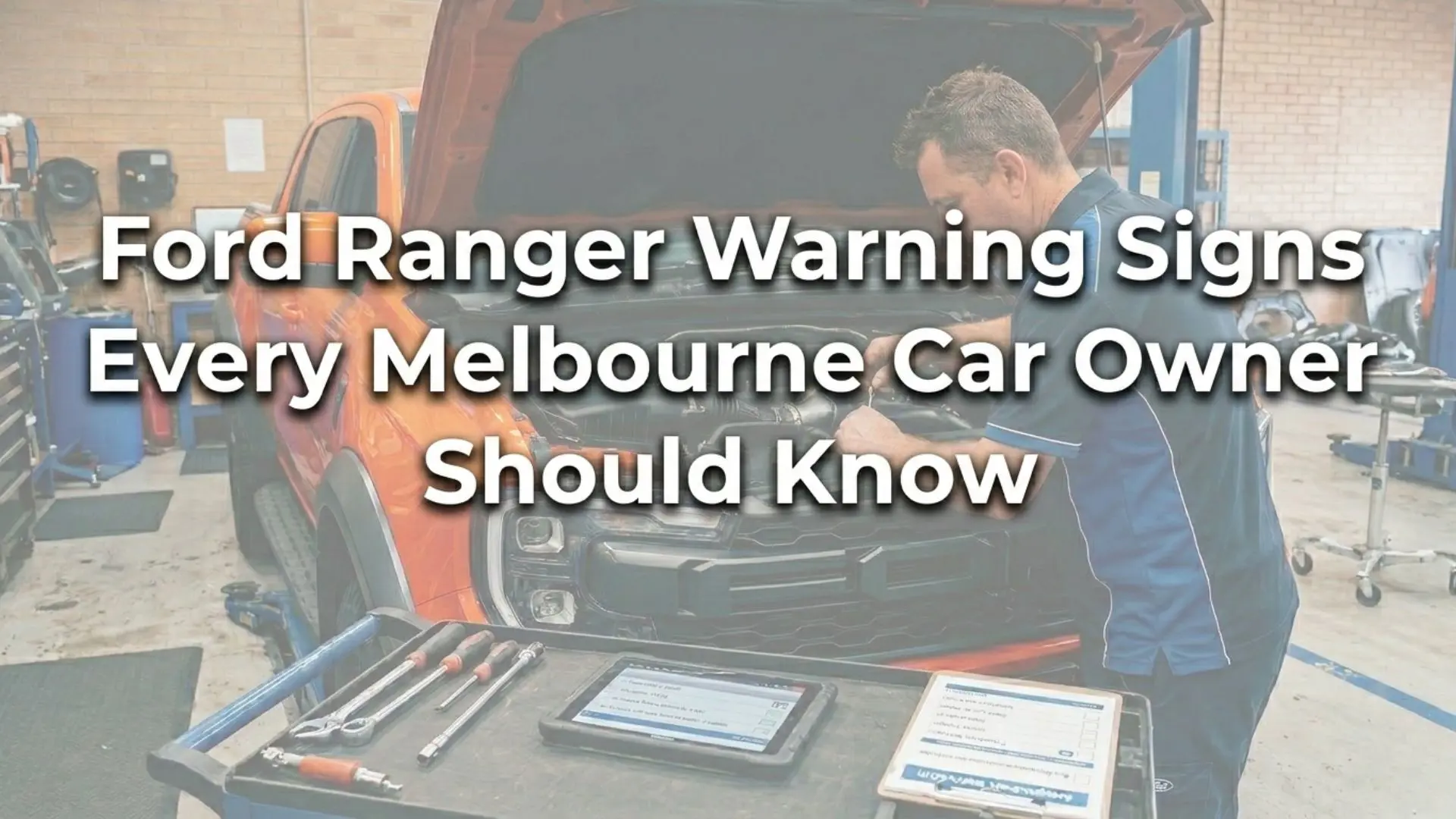
The Ford Ranger is one of Australia's best-selling utes, and thousands of Melbourne owners rely on it every single day for work, towing, and weekend adventures. But even the toughest ute on the road has its weak spots.
At BCS Workshop, our team handles Ford Ranger repairs and services for car owners coming from surrounding suburbs, including Clayton, Glen Waverley, Dandenong, Oakleigh, and Wheelers Hill. Whether your Ranger has a diesel particulate filter issue, a transmission fault, or a check engine light that won't go away, we diagnose it accurately and fix it properly.
Call us on +61 3 9501 0011 to speak with our car mechanic in Melbourne or book a service today!
This blog will cover every major Ford Ranger common problem Melbourne car owners face, the warning signs to watch for, what causes them, and when you need to bring your Ranger in for attention.
Why Is the Ford Ranger So Popular in Melbourne?
Before diving into the problems, it helps to understand why so many Melbourne residents choose the Ranger over everything else. The Ford Ranger combines towing capacity, fuel efficiency, off-road capability, and daily drivability in a way few other vehicles do. It handles everything from Dandenong Ranges tracks to Port Phillip Bay fishing trips to Mulgrave industrial estate work runs.
That versatility, however, means the Ranger gets put through its paces. Melbourne's mix of stop-start inner-suburb traffic, highway driving, and the occasional rough terrain creates the perfect conditions for some of the Ranger's known weaknesses to surface. Understanding what to look for and acting quickly is the difference between a minor service visit and a major repair bill.
What Are the Most Common Ford Ranger Problems in Melbourne?
Here are some of the common problems:
1. Is a Blocked DPF One of the Most Common Ford Ranger Issues?
Diesel particulate filter (DPF) blockages are, without question, the number one complaint from Ford Ranger diesel owners in Melbourne. The DPF's job is to trap soot and particulate matter from the exhaust before it leaves the tailpipe. The filter self-cleans through a process called regeneration, which requires the engine to run at sustained high temperatures, typically on a freeway or open road.
The problem? Melbourne is a city of short trips. School runs, inner-suburb commutes, trips to Springvale or Clayton for work, these journeys rarely give the DPF the extended heat it needs to complete a regeneration cycle. Over time, the filter blocks up, and performance drops sharply.
Warning signs of a blocked DPF include a sudden loss of engine power, a warning light on the dashboard, noticeably higher fuel consumption, and sometimes a strong fuel smell from the exhaust. In severe cases, the Ranger enters a protective "limp mode" and refuses to accelerate above a certain speed.
The solution depends on the severity of the blockage. A passive regeneration fix, taking the Ranger on a sustained 30-minute motorway run, sometimes resolves mild blockages. More serious cases need a forced regeneration using a diagnostic tool or a full DPF clean at a workshop. Worst case, the DPF needs replacement. Detecting the problem early saves significantly on repair costs.
At BCS Workshop, we use advanced car computer electronics diagnostics to read your Ranger's DPF status accurately and recommend the right course of action rather than guessing.
Tip: If you own a diesel Ranger and do mostly short Melbourne trips, make a habit of a weekly 30-minute freeway run to keep the DPF healthy.
2. Why Does the Ford Ranger Transmission Shudder or Slip?
Transmission problems are consistently among the top Ford Ranger complaints, particularly in models fitted with the 6-speed and 10-speed automatic gearboxes. Owners report shuddering during gear changes, hesitation when pulling away from traffic lights, clunking when engaging first gear, and a general roughness that wasn't there when the vehicle was new.
The issue is multifaceted. In some cases, it comes down to deteriorated transmission fluid that has lost its ability to lubricate and cool properly. In others, it's a software calibration issue with the transmission control module (TCM) that Ford has subsequently addressed through updates. In more advanced cases, clutch pack wear inside the automatic transmission is the root cause.
Manual Ranger models are not immune either. The dual-mass flywheel found in many manual Rangers is designed to smooth out engine vibrations, but the design can lead to premature wear. When the dual-mass flywheel deteriorates, the symptoms include difficulty selecting gears, a juddering sensation during gear engagement, and a knocking or rattling sound that is particularly noticeable at low revs. Some owners have chosen to convert to a single-mass flywheel to avoid repeat issues.
Acting early on transmission symptoms is critical. What starts as a minor shudder can escalate into a full gearbox rebuild if ignored. Our transmission service and repair team at BCS Workshop diagnoses automatic and manual transmission faults accurately, and we always explain the full scope of work before any repairs begin.
3. How Does an EGR Valve Failure Affect the Ford Ranger?
The EGR (Exhaust Gas Recirculation) valve is one of the more frustrating problem areas on the Ford Ranger's 3.2L and 2.0L diesel engines. The EGR system recirculates a portion of exhaust gases back into the engine's intake to reduce nitrogen oxide emissions. While effective in theory, the system is prone to heavy carbon build-up, especially in vehicles that spend a lot of time in Melbourne's stop-start traffic on roads like Springvale Road, Dandenong Road, or the Monash Freeway during peak hour.
Over time, that carbon accumulation partially or fully blocks the EGR valve. When the valve sticks open, the engine gets too much exhaust gas recirculation and runs poorly at idle. When it sticks closed, the opposite happens, and the engine runs rough under load.
Warning signs include a rough or lumpy idle that wasn't there before, a check engine light with EGR-related fault codes, black smoke from the exhaust, reduced acceleration response, and noticeably worse fuel economy. In some cases, the Ranger will go into limp mode, which is its way of protecting itself from further damage.
An EGR clean can resolve the issue in its early stages. If the valve has failed entirely, replacement is needed. Ignoring EGR problems tends to compound over time, putting extra load on the turbo and intake manifold as well. For Ranger owners who cover a lot of short Melbourne distances, periodic intake and EGR cleaning is worth including in a maintenance schedule.
4. What Causes Turbo Problems in the Ford Ranger?
Turbocharger issues affect the Ford Ranger more than many owners realise, particularly in the 2.0L Bi-Turbo and 3.2L TDCi diesel variants that make up the majority of Rangers on Melbourne roads. The turbo is one of the hardest-working components in a diesel engine, spinning at extraordinary speeds and relying entirely on clean oil and consistent lubrication to function.
Common turbo complaints on the Ranger include a high-pitched whistling or whining sound under acceleration, noticeable power loss or lag when pulling onto a freeway or towing, increased oil consumption, and blue or grey smoke from the exhaust. These symptoms point to either a boost leak in the intercooler system, worn turbo bearings, damaged compressor blades, or oil seal failure inside the turbo.
Melbourne conditions are not particularly kind to turbos. Short cold starts, city driving where the turbo never fully reaches operating temperature, and irregular oil changes all accelerate turbo wear. One of the most damaging things a Ranger owner can do is switch the engine off immediately after sustained high-speed driving without allowing the turbo to cool down; the residual heat can bake oil inside the turbo housing, causing coking and restricting lubrication.
Our engine service team at BCS Workshop performs thorough turbo and boost system inspections. We check for boost leaks, inspect intercooler hoses, and use diagnostic equipment to confirm whether the issue is mechanical or software-related before recommending a repair path.
5. Is the Ford Ranger Prone to Cooling System Failures?
Cooling system problems in the Ford Ranger are well-documented and can become expensive if left unattended. The most frequently reported issue involves the EGR coolant hoses , the hoses that carry coolant to the EGR valve can develop cracks and leaks over time, allowing coolant to escape slowly. Because the leak is often gradual, many owners don't notice it until the temperature gauge starts climbing or there's a visible wet patch under the vehicle.
Water pump failure is another common Ranger cooling issue, typically surfacing after 100,000 kilometres. The water pump is responsible for circulating coolant through the engine and radiator. When it fails, coolant circulation stops and the engine overheats rapidly. Signs of a failing water pump include a low grinding or whining sound from the front of the engine, coolant leaks near the pump, and erratic temperature gauge behaviour.
Thermostat failures also occur on higher-mileage Rangers. A thermostat stuck in the open position causes the engine to run chronically cold, reducing fuel efficiency and increasing wear. A stuck-closed thermostat causes rapid overheating , a much more serious situation.
Melbourne's summer heat significantly increases the risk of cooling system problems escalating. An engine that overheats badly can warp a head gasket, which turns a manageable repair into a much larger one. Our team handles full radiator and cooling system services including hose inspection, pressure testing, coolant flush, water pump replacement, and thermostat checks.
6. Why Does the Ford Ranger Develop Suspension Problems?
Suspension wear is an inevitable part of life for a Ford Ranger in Melbourne. The Ranger is designed to carry loads, tow trailers, and handle rough terrain, but that same capability means its suspension components work harder than those of a standard passenger car. Ball joints, leaf springs, shock absorbers, and control arm bushings are the most commonly worn items.
Ball joint failure is particularly worth watching for. The front ball joints connect the steering knuckle to the control arm and allow the wheel to move with the suspension while also turning for steering. When they wear out, the steering feels loose and wandering, there's a pronounced clunking noise over bumps or when turning, and uneven tyre wear appears on the front axle. Left unaddressed, a failed ball joint can lead to a sudden loss of steering control.
Leaf spring issues are common on Rangers used for regular towing or carrying heavy loads. Cracked or sagging leaf springs affect ride height, cause uneven loading, and put extra stress on other suspension components. Similarly, worn shock absorbers make the Ranger bounce excessively over rough roads, reduce braking effectiveness, and accelerate tyre wear.
Melbourne's road surface variety, smooth freeways, potholed suburban streets, and gravel or dirt roads on weekends, puts the suspension through a wide range of demands. If you're weighing up whether a repair or full replacement is the right call, our guide on when to repair vs replace your suspension explains what to consider. Our suspension and shock absorber service covers full inspection and replacement of all suspension components, with a focus on restoring safe, predictable handling.
7. What Electrical Faults Should Ford Ranger Owners Watch For?
Electrical problems affect a meaningful percentage of Ford Rangers and can range from mildly inconvenient to completely disabling. Battery drain is one of the most common reports , owners return to their Ranger after a normal overnight park to find a flat battery. The cause is usually a parasitic electrical draw, where one or more components continue drawing power after the vehicle is switched off. Faulty door switches and radio modules are frequently identified as issues.
Alternator failure is another issue that tends to appear around 100,000 to 120,000 kilometres. The alternator charges the battery while the engine runs. When it fails, the battery warning light illuminates, the electrical systems begin to weaken, and eventually the Ranger will stall. Because alternator failure can mimic battery failure and vice versa, accurate diagnosis using proper testing equipment is essential before replacing parts unnecessarily.
More complex electrical faults in the Ford Ranger include wiring harness degradation , particularly in the engine bay, where heat, moisture, and vibration degrade insulation over time, and PCM or ECM malfunctions that generate multiple fault codes across several vehicle systems simultaneously. These types of faults require comprehensive diagnostic scanning rather than trial-and-error part swaps.
Our car computer and electronics diagnostics service at BCS Workshop uses advanced scanning tools to read all fault codes stored across every module in the Ranger, giving us a clear picture of what's happening before recommending any repair.
8. How Do Brake Problems Show Up in the Ford Ranger?
Brake issues on the Ford Ranger are frequently linked to the vehicle's use as a working ute. Towing heavy loads, driving on dusty or muddy roads, and stop-start Melbourne traffic all accelerate brake wear beyond what a typical passenger car experiences. Brake pad wear is the most common issue; the pads wear down, the metal backing plate begins making contact with the rotor, and a distinctive grinding or squealing noise appears during braking.
Brake rotor warping is also commonly reported on Rangers. Heavy loads combined with repeated hard braking can cause the rotors to develop uneven surfaces. The symptom is a pulsating or vibrating brake pedal under moderate to heavy braking, a sign that the rotors have lost their flat, even surface.
Brake fluid leaks, while less common, are potentially the most serious. Corroded brake lines or failing callipers can cause fluid loss, which reduces braking pressure and, in extreme cases, leads to partial brake failure. Any spongy or soft feeling in the brake pedal warrants immediate inspection. It's also worth checking whether your tyre pressure is correct when carrying heavy loads, as under-inflated tyres significantly increase braking distances on a loaded Ranger.
Our dedicated car brake services at BCS Workshop cover pad and disc replacement, calliper inspection, brake fluid testing and flushing, and full system checks to make sure stopping power is where it needs to be.
9. Does the Ford Ranger Have Clutch or Timing Belt Issues?
Clutch problems are particularly relevant to manual Ranger owners. Beyond the dual-mass flywheel issues mentioned in the transmission section, clutch plates themselves wear progressively with use. In a vehicle that regularly tows or operates in hilly terrain , both common scenarios around Melbourne's outer suburbs and Dandenong Ranges, clutch wear is accelerated. Signs of a worn clutch include a slipping sensation when accelerating hard (the engine revs but the vehicle doesn't accelerate proportionally), difficulty engaging gears, or a clutch pedal that engages very high or very low in its travel.
Timing belt or chain issues are also relevant to certain Ranger engine variants. While many modern Rangers use a timing chain rather than a belt, the chain still requires clean oil to maintain proper lubrication and tension. A stretched or worn timing chain can cause a rattling noise from the engine at start-up , particularly when the oil is cold and in severe cases, timing errors that trigger a check engine light or cause misfires.
For a full rundown of what to watch for, our blog on symptoms of a bad or failing timing belt is essential reading for any Ranger owner approaching higher mileage.
Our clutch replacement service and timing belt servicing are both part of BCS Workshop's core repair offering for the Ford Ranger.
How Should You Choose a Ford Ranger Mechanic in Melbourne?
With so many workshops available across Melbourne, the choice of where to take your Ranger matters more than most owners realise. A mechanic who lacks the right diagnostic tools may misdiagnose a fault, replace the wrong part, and leave the underlying issue unresolved. This wastes money and time, and sometimes makes the problem worse.
When evaluating a Ford Ranger mechanic near you, look for these important factors. The workshop should have current diagnostic equipment capable of reading Ford-specific fault codes across all modules, not just generic OBD codes. They should be accredited with recognised industry bodies , BCS Workshop is an accredited member of both the VACC (Victorian Automobile Chamber of Commerce) and IAME, which means our workmanship meets independently verified standards.
Look also for a workshop that services and repairs commercial vehicles regularly. The Ranger's diesel systems, 4WD driveline, and heavy-duty components require familiarity that comes from hands-on experience with utes and commercial vehicles, not just passenger cars. At BCS Workshop, we handle a wide range of commercial vehicles, including the Ford Ranger, Ford Transit, Toyota HiLux, Nissan Navara, Mazda BT-50, and more.
Finally, consider warranties on parts and labour. BCS Workshop provides a 12-month warranty on all new parts and labour from the date of service completion, giving you confidence that if something isn't right, we stand behind our work.
Does Servicing Your Ford Ranger at an Independent Mechanic Void the Warranty?
This is one of the most frequently asked questions among Ranger owners, and the answer is clearly no. Under Australian Consumer Law, you can have your Ford Ranger serviced or repaired at any licensed, independent automotive workshop without voiding your manufacturer's warranty, provided the mechanic follows Ford's service procedures, uses appropriate parts and fluids, maintains proper service records, and stamps your logbook correctly.
Dealership servicing is one option, but it is rarely the most affordable one. Independent workshops in Melbourne typically offer the same quality of work for significantly less, with more personalised service and faster turnaround times. BCS Workshop stamps your logbook and maintains detailed digital service records on every vehicle we work on, so your warranty remains fully protected.
If you're unsure about your warranty status or what your service schedule should include, call BCS Workshop on +61 3 9501 0011, and our team will walk you through it clearly and honestly.
When Should You Book a Ford Ranger Service in Melbourne?
Ford recommends servicing the Ranger every 12 months or every 15,000 kilometres, whichever comes first, under normal operating conditions. However, Melbourne driving conditions are not always "normal" by Ford's definition. Frequent towing, carrying heavy loads in the tray, consistent short-distance city driving, or regular off-road use all fall under what Ford classifies as "severe duty" operating conditions, and for these, more frequent servicing is strongly recommended.
A Ford Ranger doing mostly short Melbourne trips, think 5 to 10 kilometres each way, would benefit from a log book service every 10,000 kilometres rather than 15,000. The short trips prevent the engine from fully reaching operating temperature, which leads to accelerated oil degradation, increased moisture in the engine, and, as mentioned earlier , DPF build-up.
For Ranger owners who need help managing service costs, BCS Workshop offers Afterpay payment options across all applicable services and repairs , so you never have to delay a needed service because of timing. Businesses with multiple Rangers or other commercial vehicles can also enquire about our fleet maintenance plans, which reduce downtime and keep your vehicles operating on schedule.
Why Choose BCS Workshop for Ford Ranger Repairs?
BCS Workshop at Mulgrave is one of Melbourne's most trusted workshops for Ford Ranger service and repairs. We are an accredited VACC and IAME member, we use advanced diagnostic equipment and manufacturer-approved parts, and every job comes with our 12-month parts and labour warranty. We cover car owners from Mulgrave, Clayton, Glen Waverley, Mount Waverley, Dandenong, Oakleigh, Springvale, Wheelers Hill, and surrounding Melbourne suburbs.
Whether your Ranger has a blocked DPF, a transmission fault, an EGR valve issue, suspension wear, or an electrical problem that nobody else has been able to pin down, the team at BCS Workshop will give you a clear diagnosis, a transparent quote, and a repair that's done the first time properly.
Call us on +61 3 9501 0011 or visit us at 752A Springvale Road, Mulgrave to book your Ford Ranger service or repair today.




 Digiwhiz